Generative Engine Optimization (GEO): How ChatGPT and Perplexity Recommend Your Business
How to prepare your site and company facts so ChatGPT, Perplexity, Copilot and Google AI Overviews can find you, understand you and name you.
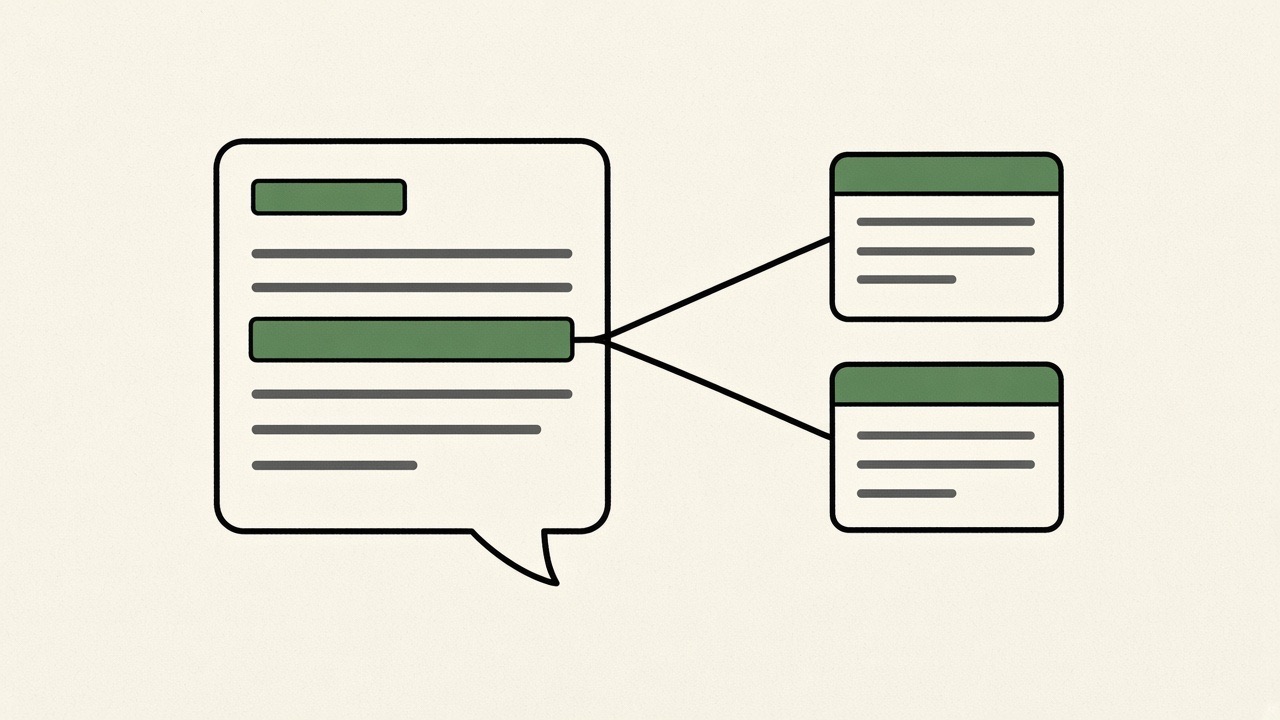
Generative engine optimization (GEO) means shaping your content and company facts so AI assistants such as ChatGPT, Perplexity, Microsoft Copilot or Google's AI Overviews can find your business, understand it correctly and name it in their answers. Classic SEO fights for a place in a list of links. GEO is about appearing in the single answer the model writes.
This article explains how AI search picks its sources, which steps actually help, and how you can tell whether your business is being mentioned.
Why generative engine optimization matters now
Questions such as "Which fiduciary in Basel specialises in startups?" or "What does a bathroom renovation cost in Switzerland?" increasingly go straight to an AI assistant. Google also places an AI overview above the classic results on many searches. Fewer people click through ten websites. They read the summary and contact the businesses named in it.
For an SME that is both an opportunity and a risk. If you are in the answer, you often get the enquiry directly. If you are missing, you are not considered at all.
How AI search finds an answer
Most AI search products work in two steps. First they look for relevant, current pages in a search index. Then the language model summarises what it found and links the sources.
- ChatGPT uses its own crawler for web search (OAI-SearchBot) and search partners.
- Perplexity runs its own index with the crawler PerplexityBot.
- Microsoft Copilot is built on the Bing index.
- Google's AI Overviews use the normal Google index.
The most important rule follows from that: if a page is not crawled and indexed, it cannot be cited. Models also have older trained knowledge, built from many mentions across the web. A business that is mentioned often, and in a consistent way, is more likely to be known there.
8 steps that improve visibility in AI answers
1. Be crawlable
Check your robots.txt. Googlebot, Bingbot, OAI-SearchBot and PerplexityBot should be allowed to read your public pages. Some hosting and CDN providers now block AI crawlers by default, so check those settings too. Separate crawlers used for training from crawlers used for search. OpenAI documents the difference in its crawler overview.
2. Sign up with Bing
Many sites are well indexed in Google and patchy in Bing. Add the site in Bing Webmaster Tools and submit the sitemap. With the IndexNow protocol you can also report new pages immediately instead of waiting days.
3. Lead with the answer
AI systems like to quote a paragraph that answers a question directly. Start a section with the core point in one or two sentences, then explain the detail. Write subheadings as the questions your customers actually ask.
4. Facts instead of slogans
"We are innovative and customer-focused" never gets quoted. "A bathroom renovation in Basel typically costs us CHF 25,000 to 45,000 and takes three to five weeks" might. Concrete numbers, prices, places, dates and sources make a page citable. Say who wrote the page, and keep important pages up to date.
5. Structured data
Schema.org markup describes your business in a form a machine can read: LocalBusiness or Organization for the company, Person for the owner and authors, FAQPage for common questions, Article for blog posts and Service for what you offer. That helps search engines and AI systems attach facts to the right entity.
6. One consistent identity
A model has to recognise that the company on your website, in the Google Business Profile, on LinkedIn and in directories is the same one. Use the same name, the same address and a similar short description everywhere. Link the profiles with the sameAs property in your schema.
7. Mentions on other websites
AI assistants prefer to base a recommendation on several independent sources: review sites, industry directories, press, partner pages, interviews, expert articles. The more often your business is mentioned in the right context, the more likely it is to be recommended.
8. An llms.txt file
llms.txt is a proposed standard: a short Markdown summary of your site, written for language models. The large providers have not officially confirmed how much they use it. The effort is small either way. You can look at my llms.txt as an example.
How to measure GEO
- Referrals in your stats. Visits from chatgpt.com, perplexity.ai, copilot.microsoft.com or gemini.google.com show that an assistant linked to your site.
- A monthly question test. Ask ten typical customer questions to several assistants and note whether, and how, your business is named. Answers vary with the wording and the day. Watch the trend, not a single reply.
- The classic tools. Google Search Console and Bing Webmaster Tools show whether the foundations are in place.
What GEO is not
GEO is not a trick for buying your way into an AI answer. Organic recommendations cannot be purchased, and tools that guarantee a mention in ChatGPT deserve a sceptical look. GEO also does not replace SEO. It sits on top of it. Without an indexed, fast, well structured site there is nothing for a model to cite.
Conclusion
Generative engine optimization, for an SME, is mostly the basics done properly. Be crawlable. Be indexed in Google and Bing. Give clear answers with concrete facts. Keep company details consistent. Get mentioned on other sites. For a local business, a clean local SEO setup is part of that, and it is also the best base for AI search.
Want to know how your business looks in ChatGPT and Perplexity today? Send me your website. I will do a short check and tell you where the biggest levers are.
Frequently asked questions
Does AI search make SEO unnecessary?
No. For current answers, AI search still uses search indexes. A technically clean, well indexed site is the requirement for being cited at all.
How long until ChatGPT names my business?
In web search it can happen soon after indexing, often within days or weeks. Showing up in a model's trained knowledge takes longer, usually months, because models are retrained at larger intervals.
Should I block AI crawlers?
Separate training from search. You can block GPTBot, OpenAI's training crawler, and still allow OAI-SearchBot for search. If you block the search crawlers, you cannot appear as a source in the answers.
What is the difference between GEO and AEO?
AEO means answer engine optimization. The two terms are used for almost the same thing: optimising for systems that return an answer instead of a list of links, which is what generative engine optimization is about.